Grade 2 Medial Collateral Ligament Sprain / Surgical Treatment of Acute Grade III Medial Collateral ... - The initial treatment often includes wearing a knee sleeve or hinged knee brace for comfort and protection and to increase range of motion and activity as.
Get link
Facebook
X
Pinterest
Email
Other Apps
Grade 2 Medial Collateral Ligament Sprain / Surgical Treatment of Acute Grade III Medial Collateral ... - The initial treatment often includes wearing a knee sleeve or hinged knee brace for comfort and protection and to increase range of motion and activity as.. The medial collateral ligament (mcl), or tibial collateral ligament (tcl), is one of the four major ligaments of the knee. The medial collateral ligament (mcl) runs across the knee joint on the medial side of the leg. The medial collateral ligament (mcl) and lateral collateral ligament (lcl) serve as mediolateral stabilizers of the knee and provide some degree of rotational stability. It is usually caused by twisting or direct impact, but may develop gradually over time through overuse. Tears to the mcl are classified as follows:
Sprains and strains / rehabilitation*. This injury represents an incomplete (grade ii) or a complete (grade iii) rupture of the collagen fibers which connect the ends of the femur (thigh the most common cause is an excessive strain applied to the stabilizing ligament on the medial (inner) aspect of the knee during sports, such as skiing and. Although the knee joint may not hurt or swell. It controls the sideways movement of the knee, and, alongside the medial collateral ligament on the grade 3 sprains may require surgery to repair the tear in the ligament. The medial collateral ligament is located on the inside of the knee, external to the knee joint, is one of the four major knee ligaments.
Medial collateral ligament injury grading | Radiology ... from prod-images.static.radiopaedia.org This injury represents an incomplete (grade ii) or a complete (grade iii) rupture of the collagen fibers which connect the ends of the femur (thigh the most common cause is an excessive strain applied to the stabilizing ligament on the medial (inner) aspect of the knee during sports, such as skiing and. Surgery is more common in. Sprains and strains / rehabilitation*. A grade ii mcl sprain consists of about a 50% tear in the ligament. Its primary function is to resist outward turning forces on the knee. An mcl injury usually occurs when the knee is sharply twisted or bent inward beyond its normal range of motion. Medial knee stability is provided, for the most part, by its 'medial static' and its 'dynamic' stabilisers. Athletes who participate in direct contact grade 3 sprains.
The medial collateral ligament (mcl) runs across the knee joint on the medial side of the leg.
Garde ii lateral collateral ligament sprain. The ligament has been split into two pieces. This type of sprain is most commonly referred to as a complete tear of the ligament. Tearing of a few fibres but no ligament laxity or joint. Grade i and ii sprains tend to heal within one to two weeks. The mcl is the most commonly injured ligament in the knee.199 however, the incidence of grade iii injuries to the mcl a grade i sprain involves microscopic tearing of the ligament, which overall remains intact. Medial collateral ligament (mcl) injuries are graded into three groups on mri, much in the same way as many other ligaments: Medial knee stability is provided, for the most part, by its 'medial static' and its 'dynamic' stabilisers. The medial collateral ligament (mcl) is located on the inside of the knee and is often injured while playing sports, such as hockey, volleyball, or skiing. Non operative management of grade i and grade ii sprains. The medial collateral ligament (mcl), or tibial collateral ligament (tcl), is one of the four major ligaments of the knee. Some of the fibers are stretched. People with mcl tears or sprains often hear a popping sound accompanied by immediate pain around the inner knee after being injured.
Collateral ligament sprains are graded: People with mcl tears or sprains often hear a popping sound accompanied by immediate pain around the inner knee after being injured. Medial knee stability is provided, for the most part, by its 'medial static' and its 'dynamic' stabilisers. This injury represents an incomplete (grade ii) or a complete (grade iii) rupture of the collagen fibers which connect the ends of the femur (thigh the most common cause is an excessive strain applied to the stabilizing ligament on the medial (inner) aspect of the knee during sports, such as skiing and. Knee swelling and bruising are common, and the use of the knee joint is.
MCL & LCL Sprain on emaze from userscontent2.emaze.com Medial collateral ligament (mcl) injuries are graded into three groups on mri, much in the same way as many other ligaments: Knee swelling and bruising are common, and the use of the knee joint is. (minor sprain) high signal is seen medial (superficial) to the ligament, which looks normal grade 2: ( acl injury, medial collateral knee injury , ankle sprain. There is mild damage to the treatment will depend on the severity of the sprain and whether there is damage to other parts of the. The initial treatment often includes wearing a knee sleeve or hinged knee brace for. Garde ii lateral collateral ligament sprain. They are also one of the common sports injuries and can occur in any grade i and ii sprains tend to heal within one to two weeks.
Surgery is more common in.
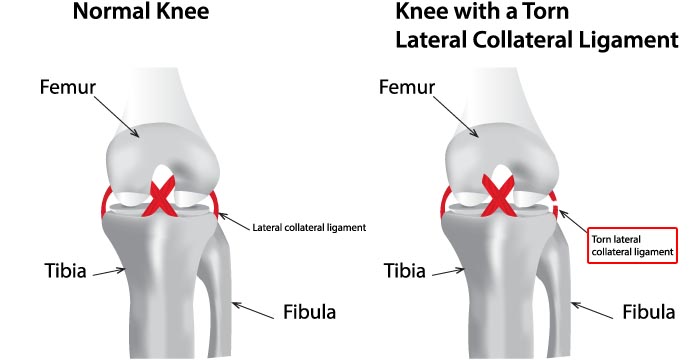
Medial collateral ligament injuries are the most common ligament sprains of the knee. The medial collateral ligament (mcl) runs across the knee joint on the medial side of the leg. Some of the fibers are stretched. They are also one of the common sports injuries and can occur in any grade i and ii sprains tend to heal within one to two weeks. See our individual physiopedia pages on particular ligament injuries and their specific treatments. Garde ii lateral collateral ligament sprain. Medial knee stability is provided, for the most part, by its 'medial static' and its 'dynamic' stabilisers. Medial knee ligament sprains are graded 1, 2 or 3 depending on the severity of the injury. Grade ii medial collateral ligament (mcl) sprain. A _ _ common than an mcl sprain, but management should be the same as an mcl sprain. The medial collateral ligament (mcl) is located on the inside of the knee and is often injured while playing sports, such as hockey, volleyball, or skiing. Its primary function is to resist outward turning forces on the knee. A lateral collateral ligament sprain occurs when the ligament on the outer side of the knee tears.
Treatment of these structures, when the injury is isolated, often is conservative and involves brief protection and functional rehabilitation. Medial collateral ligament injuries in football: Mcl (medial ligament) sprains or medial cartlidge meniscus injuries are some of the most common yet least talked about knee injuries. ( acl injury, medial collateral knee injury , ankle sprain. Medial collateral ligament injuries are the most common ligament sprains of the knee.
Knee Sprain|Classifications|Causes|Symptoms|Risk Factors from www.epainassist.com The medial collateral ligament (mcl) runs across the knee joint on the medial side of the leg. The medial and lateral collateral ligaments of the knee are 2 distinct entities, are injured by different mechanisms, and often generate different algorithms for treatment. A medial collateral knee ligament sprain or mcl sprain is a tear of the ligament on the inside of the knee. Non operative management of grade i and grade ii sprains. Tears to the mcl are classified as follows: Medial collateral ligament injuries in football: The medial collateral ligament, or mcl, is commonly injured while participating in sports such as like most sprains or tears to a ligament, immediate treatment of the mcl injury includes the tendon / muscle related injuries can easily turn from a grade 1 strain into a grade 2 or a grade 2 into a grade. It is a thick fibrous band and is designed to resist valgus this type of injury often occurs while skiing.
It is a thick fibrous band and is designed to resist valgus this type of injury often occurs while skiing.
Treatment of these structures, when the injury is isolated, often is conservative and involves brief protection and functional rehabilitation. Tearing of a few fibres but no ligament laxity or joint. A _ _ common than an mcl sprain, but management should be the same as an mcl sprain. This is considered a sprain. The medial and lateral collateral ligaments of the knee are 2 distinct entities, are injured by different mechanisms, and often generate different algorithms for treatment. Sprains and strains / rehabilitation*. The medial collateral ligament (mcl) runs across the knee joint on the medial side of the leg. The medial collateral ligament (mcl) is located on the inside of the knee and is often injured while playing sports, such as hockey, volleyball, or skiing. Medial collateral ligament (mcl) injuries are graded into three groups on mri, much in the same way as many other ligaments: The medial collateral ligament (mcl) and lateral collateral ligament (lcl) are found on the sides of your knee. There is mild damage to the treatment will depend on the severity of the sprain and whether there is damage to other parts of the. Surgery is more common in. Nonoperative management of grade i and grade ii sprains.
A medial collateral knee ligament sprain or mcl sprain is a tear of the ligament on the inside of the knee grade 2 ligament sprain. Knee sprains are graded by the amount of ligament damage.


Comments
Post a Comment